This musculoskeletal disorder can pose physical and emotional challenges for kids
[5 min read]
In this article:
- Learn about pectus excavatum, or PE, a chest wall malformation that affecting children and adults that, if left untreated, can have long-term physical and emotional consequecnces .
- There are several treatment options for PE, including corrective surgery and non-surgical vacuum bell therapy that lifts the breastbone over time.
- Experts emphasize that treating PE is corrective and not cosmetic, and should prioritize quality of life and long-term goals.
- Learn more from a Providence Swedish pediatric surgery expert.
Providence Swedish is home to a pediatric surgery program that provides comprehensive, collaborative care for children and their families. Board-certified pediatric surgeons perform routine and complex procedures for children and adolescents, as well as neonatal surgeries in partnership with our team of dedicated obstetricians and neonatologists. Our surgeons ensure that kids and families have an opportunity to thoroughly discuss their case and review options and expected outcomes. Our team is expansive, synergistic team includes anesthesiologists, hospitalists, nurses, pharmacists, child-life specialists and therapists who are committed to children and their parents.
A common condition treated by our team is pectus excavatum (PE), a chest wall deformity that can cause significant physical and emotional challenges for kids if left untreated. To learn more, we spoke with Robert Weinsheimer, M.D., medical director of pediatric surgery at Providence Swedish and expert on treating PE, who emphasized the importance of addressing PE through a corrective, rather than a cosmetic lens.
“PE can carry significant burdens — particularly for adolescents — around body image, appearance and self-esteem, and can be associated with increased levels of depression and anxiety, and young patients may avoid many typical activities, such as swimming and sports. We recommend that treatment decisions are based on long-term goals and quality-of-life, not couching these as “cosmetic” benefits,” says Dr. Weinsheimer. “And possibly most importantly, we strongly recommend that patients come in for evaluation at a younger age when we can have a meaningful impact on the chest wall structure while they are still candidates for non-surgical interventions.”
What is PE?
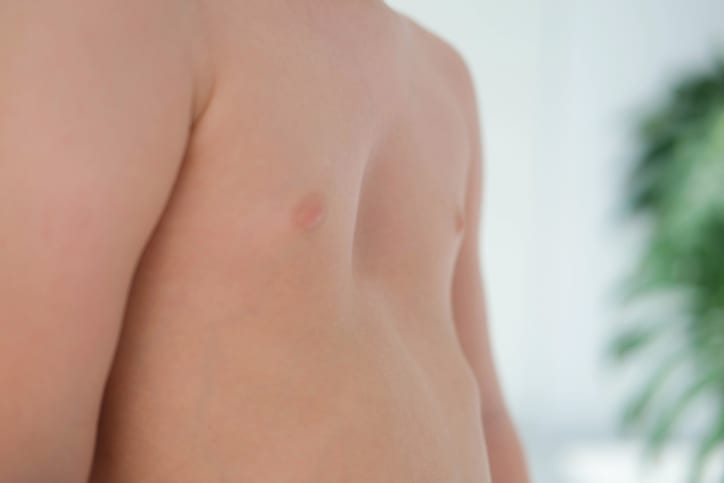
Pectus excavatum (PE), sometimes called “sunken chest,” is a condition a person is born with that affects the shape of the chest. The breastbone (sternum) sits farther inward than usual, creating a noticeable dip in the chest.
PE is often identified in childhood, but its effects can change over time. As the chest becomes stiffer with age—or during growth spurts, athletic training, pregnancy, or other health changes—some people begin to notice symptoms they didn’t have before.
When evaluating PE, it’s important to look beyond appearance alone. Providers consider:
- How severe the chest indentation is
- Whether the heart or lungs are affected
- What treatment options are available and what results are realistic
- How the condition affects confidence, self-image, and emotional well-being
PE is more common than many people realize. Based on U.S. population data, as many as 1.1 million people in the United States may be living with PE, including those with mild cases or those who have never been formally diagnosed.
Why the condition occurs and who is affected
Doctors don’t yet fully understand why PE occurs. It appears to be related to how cartilage and connective tissue in the ribs grow, which can push the breastbone inward over time and deepen the chest indentation.
PE often runs in families and may be associated with other conditions that affect connective tissue, such as scoliosis, Marfan syndrome, or Ehlers-Danlos syndrome.[2]
Although PE begins early in life, many people reach adulthood without treatment. Treating PE later can be more challenging because the chest wall becomes less flexible with age—but effective treatment options are still available for adults.
Clinical evaluation and treatment
Evaluation starts with a detailed conversation about symptoms and quality of life. Providers may ask about:
- Shortness of breath
- Difficulty exercising or keeping up with others
- Chest pain or heart palpitations
- Fatigue
- How chest appearance affects confidence or daily life
A physical exam looks at the depth and shape of the chest indentation. Imaging tests—most commonly a CT scan—help determine how severe the condition is and whether the chest shape is uneven. Additional tests, such as an echocardiogram or breathing tests, may be used to see how the heart and lungs are functioning.
In some people with PE, the sunken chest reduces space inside the chest or places pressure on the heart. This can limit endurance or cause symptoms, especially during physical activity.
Often, PE is first noticed in infancy or early childhood, but it may become more pronounced during adolescence, particularly during growth spurts. Teenagers, especially athletes—may notice difficulty with training or an inability to keep up with peers.
It’s important to understand that PE is not just a cosmetic issue. While mild cases may not affect physical performance, PE can have a meaningful impact on mental and emotional health. That’s why treatments are better described as corrective or restorative—they aim to return the breastbone to a healthier position, not simply changing appearance.
Treatment options
Treatment depends on how severe chest indentation is, whether symptoms are present, and the patient’s age.
- Monitoring and reassurance:
Mild cases without symptoms may only need regular checkups and monitoring. - Non-surgical approaches:
Some patients benefit from posture and strengthening exercises.
Younger patients (typically ages 10–12) may be candidates for vacuum bell therapy, a non-surgical option that uses a custom-fitted silicone device worn at home. Gentle suction gradually lifts the breastbone over time. This option works best when the chest wall is still flexible. - Surgical treatment:
Surgery is recommended for patients with more severe chest indentation or symptoms.- Ravitch procedure: A traditional open surgery that reshapes the chest by removing cartilage and repositioning the breastbone. It is effective but involves a more intensive recovery.
- Nuss procedure (preferred): A minimally invasive surgery in which one or more curved metal bars are placed under the breastbone to gently push it outward. The bars stay in place for about three years while the chest heals around them, then they are removed. Most patients go home the same day and recover steadily.
Many people with PE remain stable without treatment. However, symptoms related to heart and lung function can become more noticeable over time. From a practical standpoint, delaying treatment can make surgery more complex as the chest wall becomes less flexible.
For teenagers and adults with a more rigid chest, surgery—most often the Nuss procedure or a related minimally invasive approach—can still be very successful. Care is often provided by a coordinated team that includes surgeons, sports medicine specialists, and rehabilitation experts, helping patients recover safely and return to everyday activities with confidence.
Learn more and find a physician or advanced practice clinician (APC)
When you have questions or concerns about your child’s wellness, Swedish Pediatrics is here to help. Call today to schedule a visit.
You can also contact Swedish Primary Care to schedule an appointment with a primary care physician. If you or your child has an illness, you can connect virtually with your care team who can review your symptoms and give instructions and follow-up care as needed. With Swedish ExpressCare Virtual, you can receive treatment in minutes for common conditions such as colds, flu, urinary tract infections and more. You can use our provider directory to find a specialist or primary care physician near you.
Information for patients and visitors
Additional resources
Misinformation is triggering vaccine doubt and driving a rise in preventable pediatric illness
Parents, it might be time to rethink this old standby for coughs, colds and allergies
What to know about hand, foot, and mouth disease and how it spreads
Your kiddos have unique health needs from 6 to 12. Here’s some guidance to help them thrive.
Newfound sounds: cochlear implants help patients hear the world, often for the first time
This information is not intended as a substitute for professional medical care. Always follow your health care professional's instructions.
The Providence app offers world-class health care with human connection
Follow us on Facebook, Instagram and X.