"I call it the Disneyland experience, because it's such a roller coaster of emotions."
[5 min read]
- Providence Swedish RN Liberty Rivera didn't start out as a NICU nurse, but she says that taking a chance and changing specialties was one of the best decisions of her life.
- Rivera cares for some of Swedish Issaquah's most fragile patients and thier families.
- During Nurses Week, and every week, we celebrate our nurses and the compassionate expert care they provide to Swedish patients.
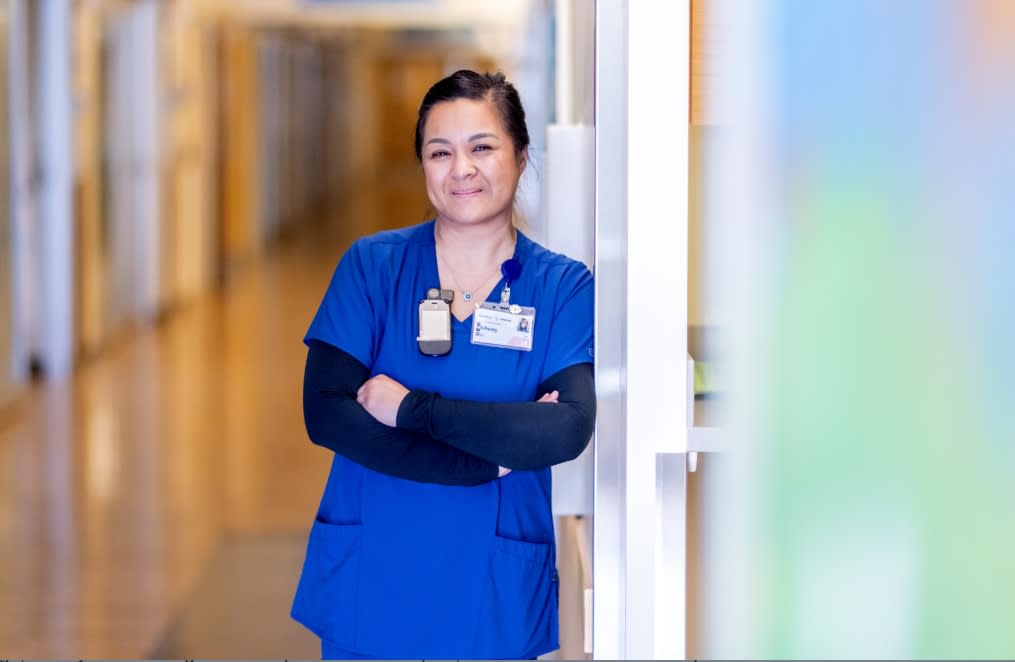
Across Providence Swedish, nurses show up each day to care for patients and families in moments that range from routine to lifesaving. For Liberty Rivera, RN, that work takes place at the NICU at Providence Swedish Issaquah, where even the smallest moments can carry enormous weight.
Rivera begins each workday with a kiss goodbye to her 11-month-old Havanese, before pointing her car in the direction of Providence Swedish Issaquah. The milelong drive is short, but it marks a distinct transition from the calm of home to the unpredictable demands of a 12-hour nursing shift.
She uses this time to rehearse the possibilities — running through what the day might demand, aware that once it starts, it rarely slows down. Nursing calls for constant anticipation, a kind of readiness she builds even before her shift begins at 7 a.m.
“We don’t always know what we’re going to get each day,” Rivera says.
Within this world of unpredictability, there are still a few moments of regularity. The first hour of the day, Rivera says, is always the busiest and, perhaps, the most stable. She’ll get a detailed shift handoff from the outgoing nurse, make initial assessments, and begin the first feedings of the day. If parents are present, Rivera will have a conversation with them.
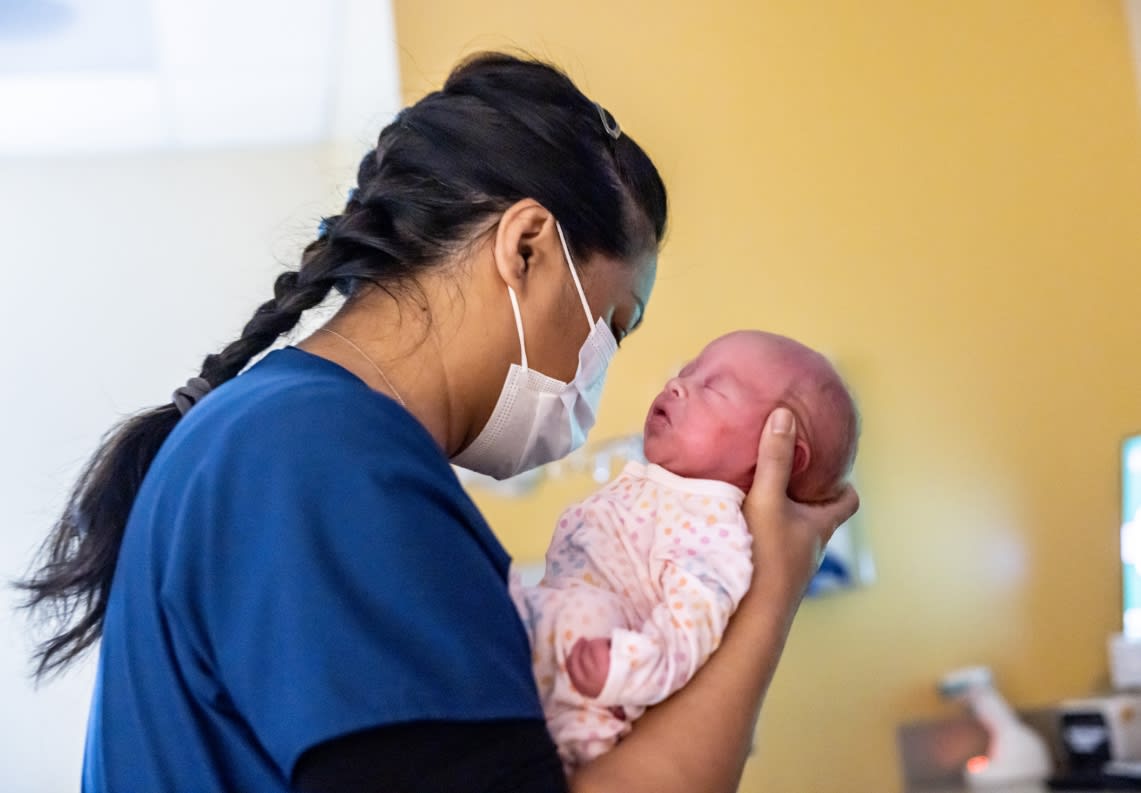
While all of this is going on, Rivera will build a mental map of what each baby will need during her 12-hour shift. Being a nurse means accepting that busy is the norm — and not the exception.
“I call it the Disneyland experience, because it’s a roller coaster of emotions, and you have to do all the technical aspects of the job while having a rapport with a family and being alongside them,” says Jenn Mcguill, interim nursing manager in Issaquah.
The rhythm of a shift
One recent day, Rivera cared for an infant whose mother couldn’t visit due to childcare challenges at home. Liberty snuggled with the baby, giving him the comfort his mom wished she could provide. Later in the day, she created a small art project for the mother to take home.
Then it was across the hall to room 222, where Cassie Derus was visiting her premature twin girls, Hannah and Ellie. Rivera focused on supporting Derus as the first-time mother learned how to care for her babies and how to trust herself.
“She is helping me build the confidence to do this on my own,” Derus says. “That confidence means everything.”
Rivera spends the rest of the morning and afternoon on the move, restocking the supply cart, preparing admission beds for the next babies, and giving the other nurses a break.
When she’s not attending the three babies on her watch, Rivera will talk — and occasionally joke — with other nurses, squeezing in a few bites of lunch at her desk before work gets busy again. Sometimes Rivera will walk down to the labor and delivery room to assist if there are any high-risk deliveries.
Later that afternoon, Derus and her husband return for another visit, even holding their babies. When one twin’s oxygen levels begin to drop in her father’s arms, Liberty immediately spots the issue — a slight neck tilt. One gentle adjustment, and the oxygen levels steady.
Two days later, after 16 days in the NICU, Hannah and Ellie went home.
“Liberty has such positive, upbeat energy,” Derus says. “She allows you to be hands-on, and that makes you feel comfortable. She kind of throws you into the deep end, but in a good way. It’s incredibly helpful.”
Finding her home as a nurse
That Rivera is here on this day, working with premature babies in the NICU, is a bit of surprise given how her nursing career started.
Fifteen years ago, Rivera was working with adult patients at a hospital, when she received an unexpected notice that NICU nurses were desperately needed. The opportunity intrigued her, but the thought of caring for the tiniest, most fragile patients — and their equally vulnerable parents — was terrifying.
“I was scared at first and didn’t want to do it,” Rivera says.
Like many NICU nurses, those early years were an intense time of learning. But over time, with experience, training, and the support of her team, her early uncertainty was replaced by confidence and a strong sense of purpose.
“It turned out to be the best decision I have ever made,” says Rivera, who is in her 15th year overall as a nurse and third in Issaquah. “The NICU was my fit. I love being part of the lives of these families. It’s so gratifying when a parent reaches out years later, saying I was there when their child was born. Moments like that make me wonder how I even get paid to do this.”
Where skill and compassion meet
Nurses live in two worlds at once: the medical world of fluids, lines, tubes, and charting, and the emotional world of anxious families, tiny victories, and steady reassurances.
“I think having experience makes me feel comfortable sharing perspectives. I always try to be positive. We might be having a bad day, but we’ll have a different day tomorrow,” Rivera says.
Rivera never pictured herself in the NICU, yet it has become the place where her strengths feel fully realized, where her steady presence and compassion matter in ways she never expected.
“Liberty really loves her job,” Mcguill says. “She loves babies, and she loves the families. She just oozes love.”
Like Rivera, every Providence Swedish nurse brings their very best to each patient, every day. Though each role carries its own unique challenges, the core of nursing remains constant — marked by exceptional intelligence, clinical expertise, and profound compassion.
“It’s so empowering,” she says, smiling. “Not a lot of people get to do this.”
Learn more and find physician or advanced practice clinician care (APC)
Swedish has three birth centers — First Hill, Issaquah and Edmonds — making it convenient for people who live or work in the Seattle, Eastside and North End areas. Swedish patients can take classes, meet other families, get help with lactation and go for new parents and well-baby checkups at The Lytle Center for Pregnancy & Newborns at our First Hill birth center. You can also get expert advice there and help with wellness. Visit our website to learn more about midwives at Swedish and how they can partner with you to create the most personalized birthing experience possible.
If you need a gynecologist, women's health specialist or primary care doctor, Swedish is here for you. Whether you require an in-person visit or want to consult a doctor virtually, you have options. Swedish Virtual Care connects you face-to-face with a nurse practitioner who can review your symptoms, provide instruction and follow up as needed. If you need to find a doctor, you can use our provider directory.
Information for patients and visitors
Additional resources
If a birth plan doesn’t go to plan, our OB/GYN hospitalists are there for mom and baby
Comprehensive care for people with complex pregnancies
At Swedish, midwives’ expansive role in care is helping build community
The Providence app offers world-class health care with human connection