Learn how one Swedish doc keeps pro rugby players in championship form
[3 min read]
In this article:
- Rugby is an incredibly demanding sport, requiring players to have significant strength, speed, size and coordination.
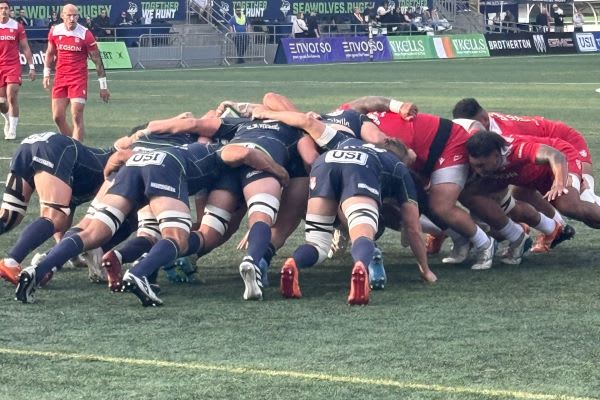
- The Seattle Seawolves is Seattle's professional men's rugby team. The team's recent loss — their only one of the season — to the California Legion ended the Seawolves' 2026 championship quest.
- Dr. David Belfie, an orthopedic surgeon at Providence Swedish, serves as the Seawolves' team doctor. He recently took a moment to share how he helps keep players healthy and, when necessary, treat the injuries that come with this sometimes-punishing sport.
David Belfie, M.D., an orthopedic sports medicine specialist with Providence Swedish Orthopedics, helps patients recover from injuries and return to the activities they love. Outside the clinic and operating room, he also serves as team physician for the Seattle Seawolves, Seattle’s men’s pro rugby team. Dr. Belfie provides medical care to players throughout the season and helps keep players healthy for this physically demanding sport.
The Seawolves were founded in 2017 and have won two Major League Rugby (MLR) championships. The team's season ended on June 14 with loss to the California Legion. As the team was preparing to regroup during the off season, Dr. Belfie (shown in photo below) took a moment to share what happens on rugby's sidelines, the injuries he sees most often and what everyday athletes can learn from professional players.
Q: What’s in your medical bag on game day?
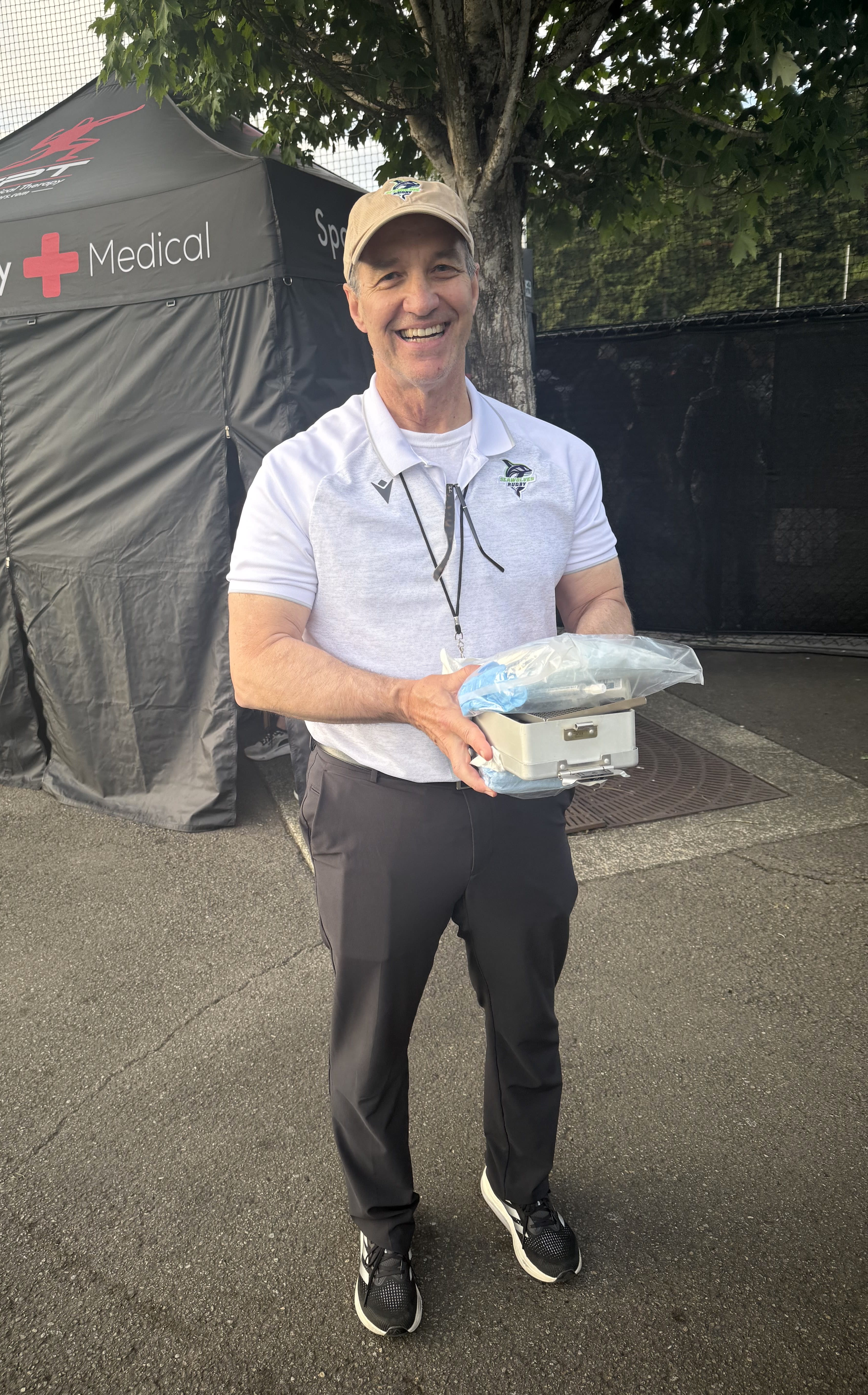
My bag includes slings, splints, sterile suture kits, bandages, a skin stapler, medications, compression wraps and a stethoscope.
Q: Rugby is known as one of the most physically demanding sports. What are some of the most common injuries you see?
We see a wide range of injuries, including skin lacerations, tendon ruptures, joint dislocations, fractures of the upper and lower extremities and ligament injuries.
Q: How does caring for professional rugby players differ from treating patients in your orthopedic practice?
There really isn’t much difference. The biggest distinction is that professional athletes often have multiple injuries at the same time, which can make evaluation and management more complex.
Q: What lessons can recreational athletes learn from professional rugby players when it comes to injury prevention?
One of the biggest lessons is the importance of strength training. The stronger you are, the more resistant you can become to injury.
Q: What are some warning signs that an injury needs medical attention rather than just rest and ice?
If you’re unable to move an arm or leg or unable to bear weight after an injury, you should be evaluated by a medical professional without delay.
Q: Are there any simple habits that can help reduce the risk of orthopedic injuries?
While there isn’t much you can do to prevent a sudden accident, many overuse injuries can be avoided. Allow your body to fully recover between workouts or activities, prioritize sleep and maintain a consistent strength-training program. Proper nutrition is also essential for recovery and injury prevention.
Q: How important are strength training and mobility work for athletes of all ages?
Loss of muscle mass contributes to many injuries and declines in mobility as we age. Strength training becomes more important than ever as we get older because it helps maintain function, mobility and overall resilience.
Q: As an orthopedic surgeon, what’s one thing you wish every athlete knew about protecting their joints and staying active for life?
As we age, our bodies become more “volume sensitive” and require longer recovery periods. At the same time, we lose conditioning more quickly. The key is finding the right balance: brief, safe and challenging exercise paired with adequate recovery.
Learn more and find a physician or advanced practice clinician (APC)
If you are struggling with a sports injury, or joint or musculoskeletal pain, the experts Swedish Orthopedic Institute can help. Our experienced surgeons offer the latest options in surgical and non-surgical care to help restore your comfort, mobility and confidence in every step. To learn more, make an appointment at our First Hill orthopedic clinic call 206-386-6171.
Whether you require an in-person visit or want to consult a doctor virtually, you have options at Providence Swedish. Contact Swedish Primary Care to schedule an appointment with a primary care provider. You can also connect virtually with your provider to review your symptoms, provide instruction and follow up as needed. And with Swedish ExpressCare Virtual you can receive treatment in minutes for common conditions such as colds, flu, urinary tract infections, and more. You can use our provider directory to find a specialist or primary care physician near you.
Information for patients and visitors
Additional resources
Inside the World of Ultimate Frisbee with a team USA physician
Dink, rally and repeat: How to play pickleball without the pain
Providence Swedish and Sounders FC team up to help kids score big #healthgoals
Find ways to relieve the discomfort of painful joints
This information is not intended as a substitute for professional medical care. Always follow your healthcare professional's instructions.
Follow us on Facebook, Instagram and X.
The Providence app offers world-class health care with human connection