Hey pickleballers! Keep your feet and ankles healthy to stay in the game.
[5 min read]
- Pickleball is a great way to work out and stay active.
- With its short stops and side-to-side movements, the fast-moving sport puts a lot of demand on your feet and ankles.
- Common pickleball injuries include ankle, tendon and ligament strains, plantar fasciitis and repetitive stress injuries.
- Read more for steps to keep you moving safely on the court and enjoying your game set after set.
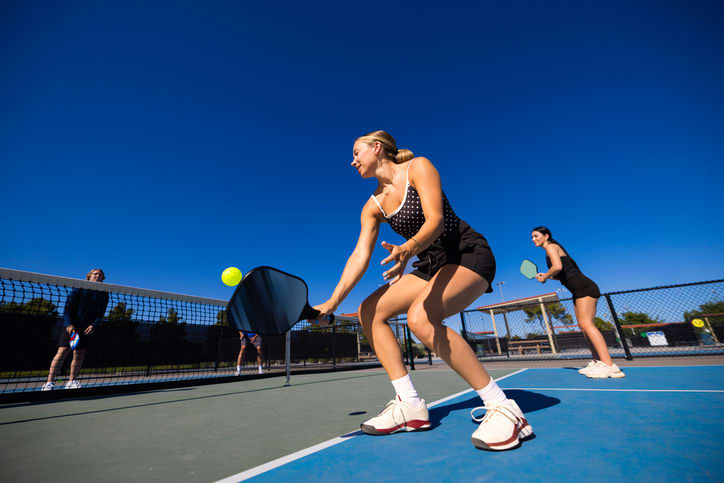
Pickleball has quickly become one of the fastest-growing sports in the country — for good reason. It’s fun, social and accessible for players of all ages. However, the quick starts, sudden stops, and side-to-side movements that make the game exciting can also put significant stress on your feet and ankles. The good news is that many of these injuries can be prevented with the right preparation and equipment.
At PacMed, a specialized team of podiatry experts treats and diagnoses a wide range of foot and ankle conditions, including sports injuries, heel pain, tendon disorders and diabetic foot concerns. To learn more about protecting our feet and ankles at the centerline and in our day-to-day lives, we spoke with Kirk Alexander, DPM, a PacMed podiatrist.
Top tips to protect your feet on the pickleball pourt
“Wear court-specific shoes. Pickleball involves many side to side movements, running shoes are unstable during side-to-side movements. Unlike running shoes, court shoes are designed to support side-to-side movement and help reduce the risk of ankle sprains," says Dr. Alexander.
"Make sure you replace worn-out footwear, because shoes lose stability and cushioning over time, even if they still look fine," Dr. Alexander advises. "You should also warm up before play. Stretching your calves, ankles, and feet can improve mobility and reduce injury risk."
Players should also increase activity gradually and avoid jumping from occasional play to multiple matches per week without allowing your body time to adapt.
And do not ignore persistent pain. Ongoing heel, arch, ankle, or tendon pain may be an early sign of an injury that requires treatment.
Some of the most common foot and ankle conditions seen in pickleball players include:
- Plantar fasciitis
- Achilles tendonitis
- Ankle sprains
- Stress fractures
- Tendon and ligament injuries
- Foot pain from repetitive impact
When should you see a podiatrist?
Early evaluation and treatment can often help athletes return to activity more quickly and prevent minor problems from becoming more serious.
While temporary muscle soreness after exercise can be normal, symptoms such as persistent pain, swelling, bruising, difficulty bearing weight, or recurring injuries should be evaluated by a medical professional.
“Achilles tendon ruptures are common with pickleball. Signs of a rupture would include a notable “pop” in the back of the ankle. Most patients look back to see if someone kicked them or hit them in the back of the leg. Achilles ruptures can sometimes be confusing. You can walk after an Achilles rupture, and often they don’t hurt much after the initial injury," Dr. Alexander advises. "Sometimes patients delay a clinic visit because they assume they just have an ankle sprain. If you feel like you had a rupture, it is best to be seen in clinic within 2-3 days. We can always make space in clinic for patients with traumatic injuries.”
Whether you're a seasoned competitor or just learning the game, taking care of your feet can help you stay active, prevent injuries, and enjoy pickleball for years to come.
Find a PacMed physician or Advanced Practice Clinician (APC)
Like Providence Swedish, Pacific Medical Centers is part of the Providence family of organizations and offers a full range of primary and specialty care services. You can feel confident in your care team. We are committed to providing you with extraordinary care so you can achieve your best health. Visit our provider directory to find a PacMed physician or APC near you. You can also call PacMed's New Patient Information Line at 1.888.4PACMED (1.888.472.2633).
Additional resources