Pain relief during labor: What are your options?
[4 min read]
In this blog:
- According to the National Center for Health Statistics, the percentage of U.S. mothers with a singleton, vaginal birth who used pain control during labor was about 75.4% in 2024.
- The American College of Obstetrics and Gynecologists states that labor pain-relief medication does not increase the likelihood of cesarean birth or have a long-effect on the baby's development.
- A Providence Swedish midwife offers more insight into pain control options during labor and childbirth, and how your care team can help you make the decision best for you and your baby.
It’s an exciting time when your baby’s arrival is getting closer. There’s a lot to prepare for and probably, a lot of things you’re wondering and worrying about, including how childbirth will feel.
It’s completely normal to wonder about labor, especially how you’ll manage discomfort and pain along the way.
You won’t have to figure any of it out alone. Your Providence Swedish care team will be there to listen, support your choices and help you decide which, if any, is the right pain-relief option for you.
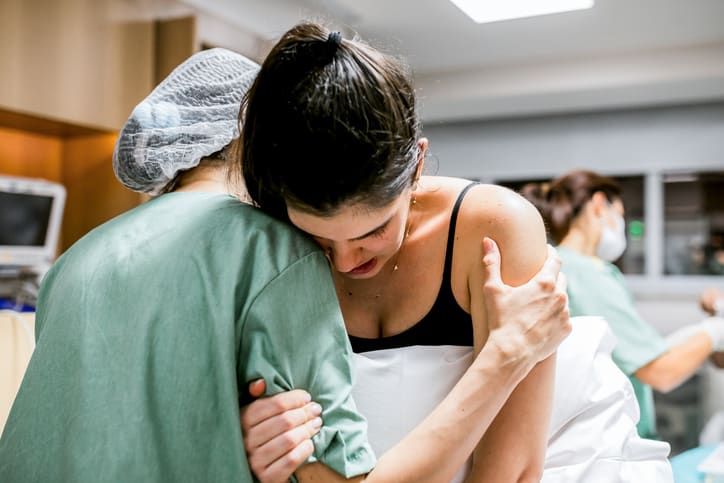
Pain management during childbirth has come a long way. Parents have more options for pain control, including movement, breathing, massage, position changes, medications and epidurals. It’s helpful for your care team to know your preferences ahead of time, but you can also change your mind during labor. There’s no one “right” way to give birth.
To learn more, we spoke with Providence Swedish midwife Kallin Shannon, NP, CNM, about what to expect and how your care team can help you feel more comfortable, confident and supported as you welcome your new little one.
“Remember that your clinicians and the rest of your support team are here for you,” says Shannon. “We want to help you navigate this unique, amazing experience of bringing your baby into the world.”
How worried should I be about labor pain and how should I prepare?
Labor is a challenging, unpredictable, and painful experience that is physically, mentally, and emotionally taxing. It is understandable to feel apprehensive or uncertain going into this process; however, you do not need to fear it. It is not an experience you go into completely alone and unprepared for. You have different coping methods, people who can support you, and options for pain relief. Throughout your pregnancy, your support team can help prepare you understand your choices, so you feel confident, informed and supported going into your labor and birth experience.
What are the primary pain control methods offered during labor?
There are different options for managing your pain in labor. Non-pharmacologic or comfort options include movement and position changes, massage, aromatherapy, hydrotherapy, and breathing and relaxation techniques. Pharmacologic options include Nitrous Oxide — better known as laughing gas — IV pain medication, and epidural. You can decide to use one or a few choices to help throughout your labor process.
What if I change my mind about wanting pain medication during labor?
This is totally fine! It is hard to predict how labor will go and how you will best manage it. Changing your mind or plan is not a failure. Labor is a unique and challenging experience. I encourage patients to be kind to themselves and have room for flexibility within their birth plan.
What role can my partner play in helping me manage my pain?
Your partner or support team plays an important part in your labor and birth. They can help support and encourage comfort measures, help you stay hydrated and comfortable, and be present to help you feel less alone. Having a supportive partner and team can help you better navigate contractions, pain, and discomfort and ultimately help you have a positive birth experience.
There's a lot of childbirth advice on social media. What are some “tips” that make you cringe?
Oh boy! There is a lot of information and many opinions on labor and birth out there, especially on social media. I’m not sure if too many things make me cringe, but I think it is easy to compare your experience to others, and this may create negative feelings about your own experience. This is the last thing I want to happen when you reflect on your birth experience. It is important to remember that birth is personal and individual journey. Just because one person has a certain experience does not mean that is what is “best” or “ideal.”
Learn more and find physician or advanced practice clinician care (APC)
Swedish has three birth centers — First Hill, Issaquah and Edmonds — making it convenient for people who live or work in the Seattle, Eastside and North End areas. Swedish patients can take classes, meet other families, get help with lactation and go for new parents and well-baby checkups at The Lytle Center for Pregnancy & Newborns at our First Hill birth center. You can also get expert advice there and help with wellness. Visit our website to learn more about midwives at Swedish and how they can partner with you to create the most personalized birthing experience possible.
If you need a gynecologist, women's health specialist or primary care doctor, Swedish is here for you. Whether you require an in-person visit or want to consult a doctor virtually, you have options. Swedish Virtual Care connects you face-to-face with a nurse practitioner who can review your symptoms, provide instruction and follow up as needed. If you need to find a doctor, you can use our provider directory
And if you have questions or concerns about an older child’s wellness, Swedish Pediatrics is here to help. Call today to schedule a visit.
Information for patients and visitors
Labor induction: What to expect when baby's arrival needs a nudgeIs a C-section the right choice for you?
Why the Vitamin K shot is a vital part of your newborn's safety net